
Why You Should Get Trail Camera Solar Panels for Your Cell Cam
It’s late August, meaning every hunter is starting to finish up chores in prep for the upcoming bow opener. Whether it is trimming shooting lanes or setting up tree stands, all seemingly come second to one of the most important pieces of prep work…hanging your cell cameras. This task is what puts the entire season into perspective – what bucks will you chase this year and where or when will you intercept them? Cell cameras are intended for uninterrupted and unpressured intel, meaning there is only one move that could save your season…going solar with your cellular trail cameras.
Cell Cameras Introduce the Issue by Nature
Most traditional trail cameras can last the first few months of the season, but cell cameras can suck batteries down a lot faster as taking pictures and sending data is a lot of work. The whole idea behind a cell camera in most situations is not checking SD cards. The goal is not having to introduce human scent or pressure into an area, food plot, bedding area, or woodlot for several months at a time. This inevitably means that you’re not offered a chance to go and refresh batteries, which is definitely a problem. SD cards can last a whole season with the right settings, but batteries can go down quick in the cold. Even Lithium batteries only last so long, which is why going solar seems to be a great option for cell cam users.
The Trail Camera Solar Panel
The universal trail camera solar panel is NEW from HME. This compact solar power panel is designed as a sustainable solution for all trail cameras especially wireless/cellular cameras.
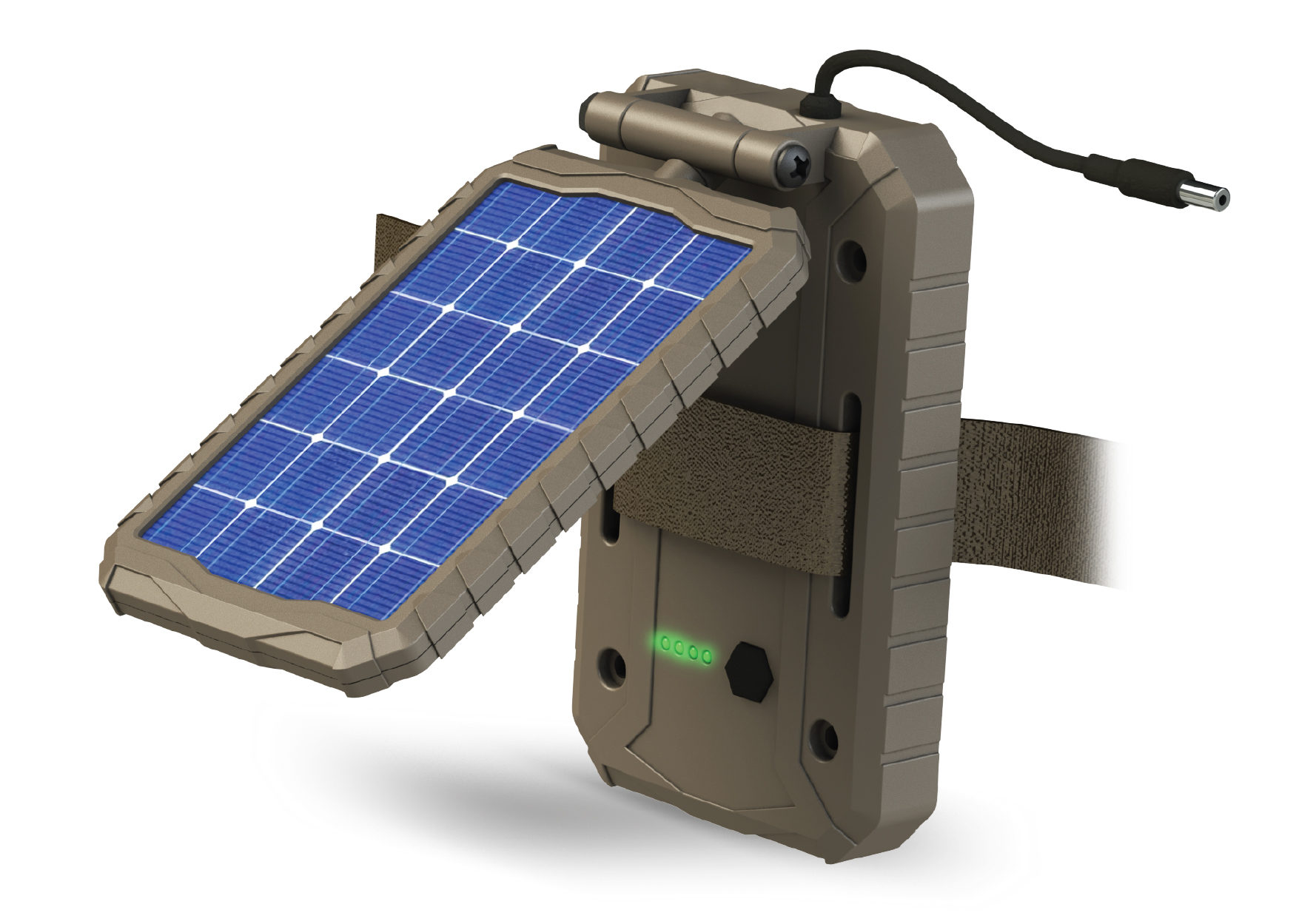
HME Solar Power Panel Features:
- Designed as a sustainable solution for all trail cameras especially wireless/cellular cameras
- 1000mAh Li-ion battery
- 12V amorphous solar panel works in low light conditions
- Notification LED to indicate battery level
- Durable all-weather construction
- 10-foot insulated metal cable
- Mounts to trees, posts, etc. via included strap & serrated brackets
Setting Up the Trail Camera Solar Panel
Before you go out to your property or piece of public land to hang the camera and solar panel, get the panel out of the box and place it in the sun for a few hours to ensure a full charge. Put it back in your pack or the box with the strap and cable…it would also help to grab the directions!
When hanging your trail camera, simply hang the solar panel on the same tree or post facing towards the south or towards an opening in the canopy in a forested setting. Once strapped, release the solar panel with the horizontal and vertical adjustment knobs, positioning it at an angle to catch the sun (this will look like it is positioned 45 degrees from the tree). Plug the 10-foot metal cable into the external battery port (located at the bottom of most cameras like the Stealth Fusion Camera).
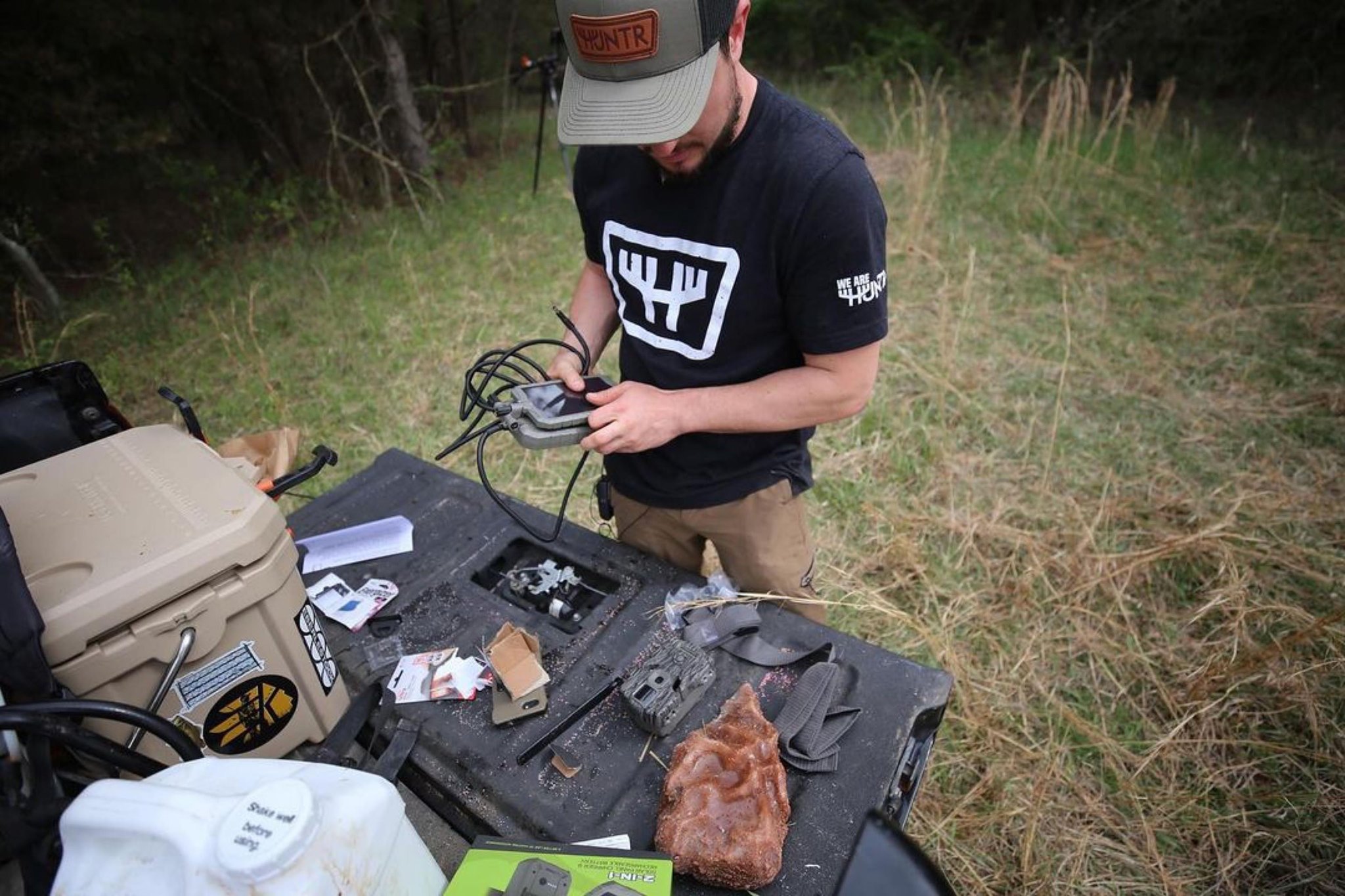
If you are able to (i.e., not hunting public land), carry a hunting hand saw or set of pruners. Our hunter combo pack is a perfect solution for most usage throughout the offseason and season, and comes with both. You can put them to work taking out a few branches that could drastically help sunlight hit the panel of the camera.
Trail Cameras Lasting a Whole Season?
The solar panel, even placed in low light conditions (e.g., shade from summer canopy cover), still adds an impressive power bank on top of your cell camera’s lithium batteries if you fully charge it before you place it. When the leaves do happen to fall in late November and December, you will be looking at a recovering battery. When most other hunters are pushing deer and pressuring them on other properties, your late-season food plot or scrape you have been putting them on all season long will be a refuge for any mature bucks. If you have been watching one all season long, just waiting for the right time to make your move, then your efforts have not been undermined by checking a card or refueling batteries. The spot remains untouched and intel is uninterrupted!
Scrapes – A Serious Location for Serious Intel All Season Long
When it comes to setting cell cameras and having them last all season, it might be tough deciding on a spot to hang a trail camera. One of the few specific locations that doesn’t dry up halfway through the season is a mock scrape, or better yet, a natural community scrape. These areas are communication hotspots all year, especially in the early bow season. Using them as a “bait site” essentially can help you not only inventory bucks on a property, but tell you when a buck is in an area. If he shows up checking a scrape at night or at any point during shooting hours, it is likely time to make a move.

Even in the late season, a scrape will be checked by deer, especially when it is in an area of late season food sources. So when most hunters are out of the woods, their trail cameras are dead, and their season’s washed up, yours will just be peaking. No pressure, full batteries, plenty of intel, and an uneducated hit list buck. Going solar with cell cameras and a great location (like a scrape for all season long) is a solid bet for your deer season.